Saturday, June 13, 2015

Cyclone Ashoba weakens into Low Pressure Area, No landfall as a Storm.

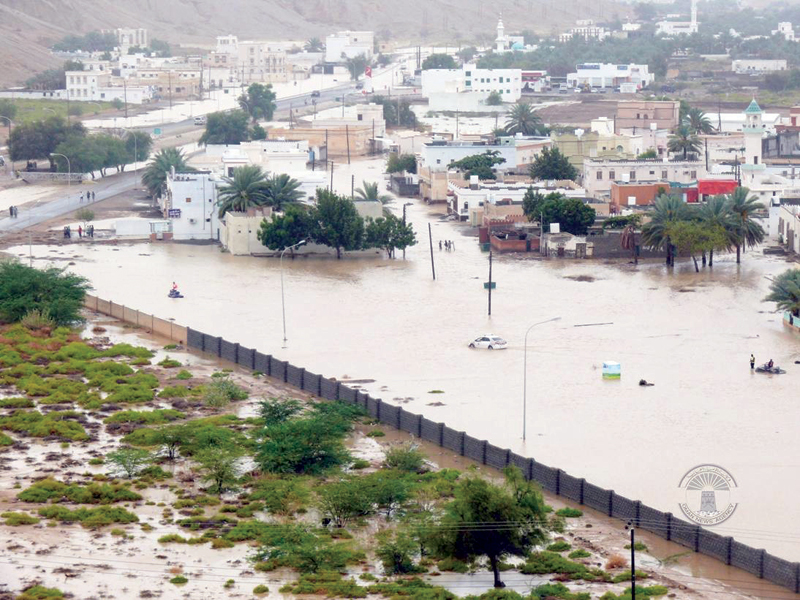
As predicted a week back the deep layered HPA and unfavorable conditions will not allow it for landfall over Oman, and Ashoba will fizzle out in Open Sea. The same has happened yesterday. Ashoba had weakened from Depression to Low Pressure Area on 12th evening. It is no more a Cyclone. But now comes the flooding.


Here are the rainfall in Oman, which are historic Masirah has got 236 mm rainfall in last two days

in mm

13.06.2015
--------------
Masirah - 170
Joba - 89
Sur - 53
Qalhat - 42
Bydiah - 8
Ras Al-Had - 6
Qurn Alam - 4
Yaaloni - 3

12.06.2015
--------------
Masirah - 66

Ras Al-Had - 40
Sur - 19
Qalhat - 7
Joba - 3
Bydiah - 4


Thursday, June 11, 2015

Historic Rains in Cherrapuniji in June 2015


Cherrapunji is posting one of the greatest ever run of Rainfall. Its going to break its wettest June recorded during June 1966 of 5832 mm

in mm

01.06.2015 - 542
02.06.2015 - 181
03.06.2015 - 54
04.06.2015 - 3
05.06.2015 - 0
06.06.2015 - 410
07.06.2015 - 340
08.06.2015 - 579
09.06.2015 - 404
10.06.2015 - 515
==============
Total 3028 mm
==============


Sunday, March 29, 2015

Tornado in outskirts of Chennai on September 2013


A tornado is a violently rotating column of air that is in contact with both the surface of the earth and a cumulonimbus cloud or, in rare cases, the base of a cumulus cloud. They are often referred to as twisters. Tornadoes come in many shapes and sizes, but they are typically in the form of a visible condensation funnel, whose narrow end touches the earth and is often encircled by a cloud of debris and dust. Most tornadoes have wind speeds less than 180 km/h. Most extreme tornadoes can attain wind speeds of more than 480 km/h. The scale of intensity for Tornado is given below.


Tornado in India

The areas of  occurrence of tornadoes in India are given in fig below. About 72% of the reported tornadoes in India have occurred in northeast India and Bangladesh.


About 76% of the tornadoes in India occur during March to May, the most favored month being April (see fig below) More number of tornadoes have occurred in the afternoon and evening. 72% of tornadoes are associated with “KalBaishakhi”.


F-3 Tornado in Odisha on March, 2009

During noon of 31st March 2009, A Tornado ravaged Odisha, a high winds damaged the villages in a narrow track of about 600 metres wide upto 6 kilometers long from the origin. The intensityof the tornado increased gradually and was maximum over Baghabuda. The tornado also passed over the water bodies like ponds in the villages, as fishes weighing 1-2 kg were found scattered. The photo of the the Tornado was put up in Odisha Diary.


It was an F-3 category Tornado, you can see the funnel upto the surface. It caused huge devastation and loss of life in Odisha. Lets now see Chennai's Tornado in 2013.

Possible F-0 Tornado in outskirts of Chennai September, 2013

There is some disagreement over the definition of funnel cloud and condensation funnel. According to the Glossary of Meteorology, a funnel cloud is any rotating cloud pendant from a cumulus or cumulonimbus, and thus most tornadoes are included under this definition. Among many meteorologists, the funnel cloud term is strictly defined as a rotating cloud which is not associated with strong winds at the surface, and condensation funnel is a broad term for any rotating cloud below a cumuliform cloud.

Chennai's Twister

So what was is it in Uthandi in outskirts of Chennai was it only a funnel cloud or did it have surface winds from the funnel cloud. The day was September 12, 2013, and the time was 4.30 pm. Robert Gagarin (58) of Uthandi happened to be on the rooftop of his house in time to catch a glimpse of a tornado in the distance.
“The sky turned pitch dark and I saw a circular cone shaped cloud formation for about 15 minutes. I clicked some pictures and also a video with my smart phone,” says an excited Robert according to Deccan Chronicle.

IMD Chennai's View

Met officials confirmed that Robert Gagarin had indeed seen a tornado, the first one reported in Chennai. “Our officials, who were on their way to Puducherry too experienced some effects of this phenomenon but we confirmed it only after seeing the picture” Dr Y.E.A. Raj, Deputy Director General of Meteorology, Regional Meteorological Centre (RMC), Chennai, told the Deccan Chronicle.

“We were able to support the photos of tornado with the pictures recorded in the DWR. It was possible only because of the continuous monitoring of the weather using the Doppler Weather Radar that detects rain clouds and squally winds perfectly up to 25 km” said Dr Y.E.A.Raj, Deputy Director General of Meteorology, Regional Meteorological Centre, Chennai.

According to S.B.Thampi, director, DWR, Chennai, a strong convictive cloud passed through that area on September 12, 2013. He added that he found a tornado vortex signature (TVS) on the Doppler Weather Radar on September 12th evening, which helped them to confirm the track and the location of tornadic rotation after he learnt about the uncommon phenomenon.

Dr Y.E.A, Raj too says there was a definite disturbance during the time mentioned on ECR Road. “We not only encountered intense weather, but our officials, who were travelling in a car to Puducherry  felt the vehicle being jolted to the left of the road. It may not have been an intense tornado as the funnel clouding did not extend to the ground, but  it was unmistakably a tornado,” he concludes.
    Eitherway it was one hell of event which we Chennaites may never hear till their lifetime. Cheers to Robert Gagarin who had the passion to take snap of the once in a life time event.

    Atacama Desert in Chile, the world driest place gets heavy rainfall after 80 years

    World Driest Place

    It's hard to overstate just how arid the Atacama, a plateau on the coast of northern Chile, really is. The Andes Mountains work like a 13,000-foot-high wall, completely blocking systems of moist air that might otherwise wander down from the Amazon Basin. As a result, the entire Atacama, a strip of land 1,000 miles wide, is virtually rainless.

    Arica, one of the desert's largest cities, receives an average annual rainfall of 0.76 mm, about the height of a flea egg.

    There are weather stations in the Atacama that have never recorded any rain. The town of Calama went without a single drop of rain from 1570 to 1971—more than 400 years.

    Historic Rainfall after 80 years in March 2015

    The area had seen years of drought, with the last major rainfall in 1997. But this year march rainfall are the heaviest in 80 years.

    Thunderstorms brought the equivalent of 7 years of rain to Chile's Atacama desert region and caused deadly flooding on last week of March, 2015.

    Antofagasta, Chile, where the annual average precipitation is 2 mm, saw 24 mm of rain in 12 hours.

    Communities in the desert region were struggling to cope with a disaster that knocked out power and cut off roadways. Thunderstorms with torrential rains moved into the Atacama, causing the Copiapo river to overflow its banks.


    Sunday, March 22, 2015

    Its Thunder storm season India - A special write-up from Tamil Nadu Weatherman


    The Pre-monsoon season or Hot weather or summer season is the names you would have heared in text books. The temperatures, particularly the maximum, during this season are very high over most parts of the country especially over central and northwest India. But there are many other Names called in different parts of India. This is also one of my favorite seasons to track weather.

    Kali Andhi

    Convective dust-storms occur over northwest India during the premonsoon season. In Africa and Arabia this phenomenon is called as Haboob. Sometimes, the distance between the cumulonimbus cloud and the associated Andhi dust-wall on the ground can be as large as 30 Km. The dust raised by strong wind reduces horizontal visibility to less than 100 meters. It may quickly build up out of the blue, transforming the dry hot afternoon into a dark brown mush. The assault of the Andhi usually lasts only a few minutes. North India often get affected by these Kali Andi every year. They are also called as black storms - Last year (2014) Delhi got hit by one of the Kali Andhi -

    http://indianexpress.com/article/cities/delhi/in-pictures-dust-storm-hits-delhi/

    Loo winds

    The Loo mainly originates in the large desert regions of the northwestern Indian subcontinent: the Great Indian Desert, the Cholistan Desert and the desert areas of Southern Balochistan. The plains of North India and Pakistan are both very hot and extremely dry during this season, water evaporates quite readily.  Loo direction is from west  to  east  and  they  are  usually  experienced  in  the  afternoons and its temperature varies between 45°C to 50°C. Entire North and north west India gets affected by Loo.  It makes life miserable for the people and the heat wave takes its toll and many people die because of it.

    Kalbaishakhi / Norwestor

    Moisture inflow from bay of bengal coupled with the heating of air, cold advection at 500 hpa and and presence of a jet stream between the levels 300 mb and 200 mb are extremely helpful for the occurrence of nor’westers. They normally form over Jharkhand and Bihar and travel entire East India affecting Odisha, West Bengal, Bangladesh. If u track the radar u can see  derechos too. Tornados too form in this period.

    Last year Bangladesh got hit by one of the norwestor and it overturned a train - http://www.thedailystar.net/storm-lashes-four-districts-22069

    Tornado in Odisha (rare image too) in 2009 - http://202.54.31.9/section/nhac/dynamic/tornado_orrisa.pdf

    Bordoichila

    It is similar to Norwestor or it is a other name of Norwestor. The local severe storms of Assam and North East India during the pre-monsoon season are termed as Bordoichila, meaning the angry daughter of Assam. Advection of warm air in the lower levels and cold air in the upper levels increases the conditional instability in the atmosphere and favor the outbreak of severe thunderstorms.

    The southerlies approaching the north–east India, originate from the Bay of Bengal and thus, are warm and moist  On the contrary, the westerlies originating from the Tibetan plateau and eastern Himalaya are cold and dry. At nighttime while the Garo, Khasi and Jaintia hills cool down more rapidly than the plains, the katabatic wind blows down the slope toward the valley. This, in turn, brings down the moist air to the valley and a front-like structure develops during the nighttime, having two different types of air masses on—either side and this causes severe thunderstorms to occur over the valley mostly during the nighttime. North Eastern states mostly, Assam, Meghalaya Tirupura gets affected by these storms.

    News of Bordoichila in 2013 http://www.assamtribune.com/scripts/detailsnew.asp?id=mar1213/state06

    Mango Showers

    Mango shower occurs along Kerala, Karnataka and also in parts of Tamil Nadu. The showers prevent the mangoes from dropping prematurely from trees and are crucial for the mango cultivation in South India.

    Mango Showers - http://www.thehindu.com/todays-paper/tp-national/tp-karnataka/article1824274.ece

    'Cherry Blossom’ or ‘Coffee showers’

    It is a local wind that blows over the interior Karnataka during the hot weather season and is extremely helpful for coffee cultivation. The Hills in the interior Karnataka gets most of these rains. -

    Blossom or Coffee Showers - http://www.thehindubusinessline.com/industry-and-economy/agri-biz/karnataka-coffee-belt-gets-good-blossom-showers/article4512891.ece

    Saturday, November 8, 2014

    NEM 2014 Summary - To sum up Systems form October till November 20th (projected)


    1. Cyclone Hudhud (10 to 14th October) - Perfect Cyclone made a landfall, close as a super cyclone.
    As per IMD, the 1999 Orissa cyclone is the strongest storm to hit the Indian coast since 1891 with a wind speed of nearly 260 kmph and the  the second strongest storm was Phailin which hit Gopalpur in Odisha at a wind speed of 220 kmph. IMD says Hudhud is the 3rd most strongest Cyclone to make landfall since 1891 at a wind speed of 206km/hrhttp://timesofindia.indiatimes.com/city/visakhapatnam/Vizag-first-Indian-city-directly-hit-by-cyclone-Hudhud/articleshow/44864271.cms These are some of the IMD officials who are spoiling the name of IMD without knowing facts. The 1964 Dhanushkodi cyclone, 1990 Andhra Cyclone,  1977 Andhra Cyclone, Tyhoon Gay 1989 (Andhra) all made landfall with over 220 km/hr winds. All were Super Cyclones.  Tamil Nadu did not get any rains from Hudhud.

    Coming to Hudhud with over 200 km/hr winds and rainfall of 500 mm was reported in some places in AP in two days. Orissa too got blinding rains of over 400 mm at some places in 2 days.  Places in Madhya Pradesh too reported 300 mm in a day. The rains were right upto Uttar Padesh. Nepal got surprise hit and caused Avalanches.


    2.NEM onset and Comrin-Mannar-Sri lanka Circulation (16-24th October) - stood like a wall
    Long lasting system like the WML in Andhra Pradesh in 2013. It stood like a wall and gave continous rains. The places in Tirunelveli / Tuticorin got over 500 mm rains. Right from Kanyakumari to Chennai got widespread rains. Chennai got some 300 mm rains from this system. The dry regions of Thoothukudi and Tirunelvei cannot be called as drought hit regions anymore.

    3. Cyclone Nilofer - (25-30th October) - landfall was never there
    It intensified in open waters, when it was close to Indian Coast as a Depression. The wind discontinuity gave Coimbatore, Theni, Kanyakumari, Madurai, trichy, Nilgiris and Tuticorin all got good rains. Some places in Trichy close to 200 mm in a day. The cyclone excited many weather freaks like us in Chennai, from Mumbai, Gujarat and also Pakistan. But the end was written before. It went into very very high VWS and got sliced off. Oman got more rains than Pakistan and Gujarat.

    4.Tamil Nadu Circulation (November 1st to 4th) - Gave moderate rains
    SW bay Circulation persisted close to TN and gave good rains for a day or two to Chennai. Madurai got 150 mm from this system. Many other places from Kanyakumari, Theni, Tirunelveli too got 100-150 rainfall.

    5.Deep Depression (November 4th- till date) - Wrapped by Dry Air and cut-off by Vertical Wind shear  
    The elonagted trough from north TN to Andaman created this Depression. It caught all models off track, they showed Burma, Bangaldesh, Odisha, West Bengal and North AP. Wrapped by Dry Air and cut-off by Vertical Wind shear, the end was known to everyone. The system will come to TN coast as a very weak low. Some places in South AP may get around 40-60 mm rainfall from this system. North TN including Chennai will also get light rains on 9/10th.

    6. Next System (November 12th to 15th) - Has to cross Major hurdle of VWS  
    The system was expected for TN crash as a significant cyclone but all models have scaled it down. It has to pass major hurdle of high Wind shear. It seems we wont get Ashoba cyclone very easily. Even it weakens. It will give good rains to Chennai and TN as it will be rain filled system. Rains can be expected from 12th November.

    7. Future Low (November 21st expected )
    Too early to speak. But if it forms it will affect TN and Sri Lanka

    Wednesday, October 8, 2014

    Cyclone Hudhud - Moving towards North AP and asusual Chennai gets a complete miss.

    Under the influence of an upper air cyclonic circulation (UAC), a low pressure area formed over Andaman Sea on October 6. The following day, the India Meteorological Department (IMD) upgraded the storm into a depression and subsequently into a deep depression. The Deep Depression increased intensity and was moving towards a favorable environment. and during early hours of October 8, the JTWC started its advisories for the storm followed by IMD upgrading it to cyclonic storm intensity and naming it "Hudhud".

    Cyclone Hudhud is expected to move towards North AP coast. The steering environment looks less complex and the storm is expected to intensify and move in a west and north westerly direction.


     Chennai - unless the cyclone weakens it will only move west and northwest direction and there by giving it an complete miss.....!

    Tuesday, September 9, 2014

    All India SWM Toppers from 01.06.2014 to 31.08.2014 (90 days into the monsoon)


    The Mawsynaram still leads but Hulikal has closed the gap in September. Only one station has made it to the list from Kerala (Kuttiyadi) and Tamil Nadu (Chinnakallar).

    in mm (min 4000 mm)

    1. Mawsynaram, Meghalaya - 7620
    2. Cherrapunji, Meghalaya - 6594
    3. Hulikal, Karnataka - 6453
    4. Agumbe, Karnataka - 6166
    5. Yadur, Karnataka - 6098
    6. Talacauvery, Karnataka - 6090
    7. Tamini, Maharashtra - 6070
    8. Mastikatte, Karnataka - 5972
    9. Nilkund, Karnataka - 5770
    10. Mani Dam, Karnataka - 5682
    11. Amboli, Maharashtra - 5418
    12. Kerekatte, Karnataka - 5398
    13. Mulshi, Maharashtra - 5355
    14. Cogar, Karnataka - 5343
    15. Kollur, Karnataka - 5329
    16. Suralbhi, Karnataka - 5191 (Till 13th August)
    17. Dawdi, Maharashtra - 5100
    18. Amgaon, Karnataka - 5062
    19. Kundal, Karnataka - 5042
    20. Bandal, Karnataka - 4852
    21. Hongadahalla, Karnataka - 4756
    22. Castle Rock, Karnataka - 4745
    23. Mahabaleshwar, Maharashtra - 4696
    24. Kitwade, Maharashtra - 4673
    25. Naladi, Karnataka - 4641 (Till 13th August)
    26. Hosakere,  Karnataka - 4600
    27. Aralagod, Karnataka - 4317 (Till 13th August)
    28. Kanakumbi, Karnataka - 4556 
    29. Gersoppa, Karnataka - 4546
    30. Kuttiyadi, Kerala - 4520
    31. Bhagamandala, Karnataka - 4450
    32. Gavali, Karnataka - 4387
    33. Dajipur, Maharashtra - 4363
    34. Gokarna, Karnataka - 4323
    35. Halageri, Karnataka - 4232
    36. Kigga, Karnataka - 4223
    37. Navaja, Maharashtra - 4220
    38. Koyna, Maharashtra - 4214
    39. Arendur, Karnataka - 4209
    40. Dungerwadi, Maharashtra - 4150
    41. Chinnakallar, Tamil Nadu - 4143
    42. Byakody, Karnataka - 4072
    43. Bhira, Maharashtra - 4007
    44. Ardi, Karnataka - 4000
    45. Kerveshe, Karnataka - 4000 

    Karnataka Top 10 Rainfall from 01.06.2014 to 31.08.2014
    1. Hulikal - 6453
    2. Agumbe - 6166
    3. Yadur - 6098
    4. Talacauvery - 6090
    5. Mastikatte - 5972
    6. Nilkund - 5770
    7. Mani Dam - 5682
    8. Kerekatte - 5398
    9. Cogar - 5343
    10. Kollur - 5329 
     Maharashtra Top 10 Rainfall from 01.06.2014 to 31.08.2014
    1. Tamini - 6070
    2. Amboli - 5418
    3. Mulshi - 5355
    4. Dawdi - 5100
    5. Mahabaleshwar - 4696
    6. Kitwade - 4673
    7. Dajipur - 4363
    8. Navaja - 4220
    9. Koyna - 4214
    10. Dungerwadi - 4150
     Kerala Top 10 Rainfall from 01.06.2014 to 31.08.2014
    1. Kuttiyadi - 4520
    2. Pambla  - 3370
    3. Vadakara - 3080
    4. Vythri - 3000
    5. Irukkur - 2950
    6. Piravom - 2750
    7. Idukki, Idukki - 2680
    8. Neeriyamangalam - 2670
    9. Cheruthazam, Kannur - 2600
    10. Taliparamba, Kannur - 2550
     Goa Top 10 Rainfall from 01.06.2014 to 31.08.2014
    1. Valpoi - 3528
    2. Sanguem - 3468
    3. Margao  - 3127
    4. Canacona - 2933
    5. Sanquelim - 2738
    6. Ponda  - 2727
    7. Quepem - 2597
    8. Pernem - 2510
    9. Ela - 2350
    10. Mapusa - 2304

    Saturday, August 30, 2014

    Kerala Rainfall Toppers from 01.06.2014 to 30.08.2014


    Kuttiyadi is the wettest placed in Kerala in this SWM

    in mm (min 2300 mm)
    1. Kuttiyadi, Wayanad - 4470
    2. Pambla, Idukki - 3280
    3. Vadakara, Kozhikode - 3010
    4. Vythri, Wayaand - 2915
    5. Irukkur, Kannur - 2900
    6. Piravom, Eranakulam - 2715
    7. Neeriyamangalam, Ernakulam - 2565
    8. Idukki, Idukki - 2565
    9. Cheruthazam, Kannur - 2535
    10. Taliparamba, Kannur - 2500
    11. Lower Sholayar, Thrissur - 2412
    12. Thariode, Wayanad - 2348
    13. Peermade, Idukki - 2320
    14. Hosdurg, Kasargode - 2310
    15. Munnar, Idukki - 2300

    Friday, August 29, 2014

    Odisha Rainfall Toppers from 01.06.2014 to 28.08.2014

    Bijepur is the wettest placed in Odisha in this SWM

    in mm (min 1300 mm)
    1. Bijepur - 1932
    2. Kantamal - 1767
    3. Sohella - 1656
    4. Deogaon - 1617
    5. Pallahara - 1565
    6. Indravati  - 1554
    7. Rampur - 1516
    8. Chandanpur - 1465
    9. Jeypore - 1460
    10. Khairmal - 1440
    11. Sambalpur - 1437
    12. Thakurmunda - 1384
    13. Balasore - 1378
    14. Salebhata - 1311
    15. Ambabhona - 1301

    Goa Rainfall Toppers from 01.06.2014 to 28.08.2014

    Valpoi is the wettest placed in Goa

    in mm (min 1800 mm)

    1. Valpoi - 3317
    2. Sanguem - 3143
    3. Margao  - 2784
    4. Canacona - 2639
    5. Sanquelim - 2548
    6. Ponda  - 2434
    7. Quepem - 2304
    8. Ela - 2244
    9. Pernem - 2242
    10. Mapusa - 2007
    11. Panaji - 1983
    12. Mormugao - 1855
    13. Dabolim - 1833

    Sunday, August 17, 2014

    All India SWM Toppers from 01.06.2014 to 15.08.2014 (75 days into the monsoon)

    One station each made it to the list from Kerala (Kuttiyadi) and Tamil Nadu (Chinnakallar). The king Mawsynaram takes back the lead after getting huge rainfall in last 4 days.

    Top 50 stations in mm (min 3500 mm)
    1. Mawsyanram, Meghalaya - 6850
    2. Talacauvery, Karnataka - 5785
    3. Hulikal, Karnataka - 5715
    4. Tamini, Maharashtra - 5650
    5. Yadur, Karnataka - 5562
    6. Agumbe, Karnataka - 5420
    7. Mastikatte, Karnataka - 5401
    8. Mani Dam, Karnataka - 5165
    9. Cherrapunji, Meghalaya - 5094
    10. Mulshi, Maharashtra - 5030
    11. Nilkund, Karnataka - 4968
    12. Shiragaon, Maharashtra - 4900
    13. Cogar, Karnataka - 4819
    14. Dawdi, Maharashtra - 4700
    15. Naladi, Karnataka - 4700
    16. Kollur, Karnataka - 4512
    17. Mahabaleshwar, Maharashtra - 4476
    18. Aralagod, Karnataka - 4317
    19. Amboli, Maharashtra - 4301
    20. Kitwade, Maharashtra - 4288
    21. Kerekatte, Karnataka - 4271
    22. Bandal, Karnataka - 4271
    23. Kuttiyadi, Kerala - 4146
    24. Bhagamandala, Karnataka - 4150
    25. Castle Rock, Karnatak - 4144
    26. Navaja, Maharashtra - 4050
    27. Koyna, Maharashtra - 3980
    28. Gavali, Karnataka - 3967
    29. Kanakumbi, Karnataka - 3950
    30. Kigga, Karnataka - 3898
    31. Gersoppa, Karnataka - 3879
    32. Halageri, Karnataka - 3855
    33. Dabbaedka, Karnataka - 3845
    34. Bhira, Maharashtra - 3821
    35. Byakody, Karnataka - 3807
    36. Arendur, Karnataka - 3800
    37. Gokarna, Karnataka - 3762
    38. Dajipur, Maharashtra - 3755
    39. Dungerwadi, Maharashtra - 3750
    40. Chinnakallar, Tamil Nadu - 3700
    41. Radhanagari, Maharashtra - 3608
    42. Maranahalli, Karnataka - 3595
    43. Mandakuli, Maharashtra - 3578
    44. Kerveshe, Karnataka - 3553
    45. Mallikarjuna, Karnataka - 3543
    46. Gaganbawada, Maharashtra - 3536
    47. Amagaon, Karnataka - 3509 (till 28th July)
    48. Kuchur, Karnataka - 3500
    49. Maageri, Karnataka - 3500
    50. Shanthahalli, Karnataka - 3500
    Lamaj and other station rainfall from Maha Agri records are not considered as reliable. Hence, they are excluded.

    Mawsynaram gets over 1500 mm in 5 days


    Just when other stations were overtaking the kings, Mawsynaram did what other stations cannot and gets over 1500 mm in 5 days  Long live the king Mawsynaram.

     in mm

    12.08.2014
    =============
    RKM Cherrapunji - 184
    Mawsynram - 158
    Cherrapunji - 85

    13.08.2014
    =============
    Mawsynram - 236
    RKM Cherrapunji - 208
    Cherrapunji - 199

    14.08.2014
    =============
    Mawsynram - 379
    RKM Cherrapunji - 361
    Cherrapunji - 300

    15.08.2014
    =============
    Mawsynram - 380
    RKM Cherrapunji - N/A
    Cherrapunji - 347


    16.08.2014
    =============
    Mawsynram - 376
    Cherrapunji -258

    RKM Cherrapunji - 250